
A famous sapphire is rarely famous for being blue. Plenty of stones are blue. What makes a sapphire famous is who owned it, who stole it, who gave it away, and what it was worth to someone at the exact moment they were deciding whether to keep it.
The five stones below cover most of the ways a sapphire earns a name. One was stolen through a bathroom window. One was donated by a woman whose second marriage is the only reason anybody remembers her first husband's gift. One has been worn to a royal christening by a queen who wasn't born when it was made. And one, chosen from a catalogue instead of commissioned, became the most photographed engagement ring on earth.
<blockquote> <strong>In Brief:</strong> the world's most famous sapphires include the 563-carat Star of India (stolen in 1964, recovered in a Miami bus locker), the 423-carat Logan Sapphire at the Smithsonian, Prince Albert's Sapphire Brooch (a Crown heirloom since 1901, still worn today), the Blue Belle of Asia (the highest price ever paid for a sapphire at auction), and Princess Diana's engagement ring, now worn by the Princess of Wales. </blockquote>The Star of India: stolen through a bathroom window
At 563.35 carats, the Star of India is the largest gem-quality blue star sapphire known to exist, and it has been sitting in the American Museum of Natural History in New York since the early 1900s, when the mineralogist George Kunz assembled it into a gem collection for financier J. P. Morgan. Morgan donated the whole collection to the museum around 1901. Nobody is entirely sure how Kunz got hold of it in the first place; his own notes from 1913 describe the stone's history before that point as "indefinite."
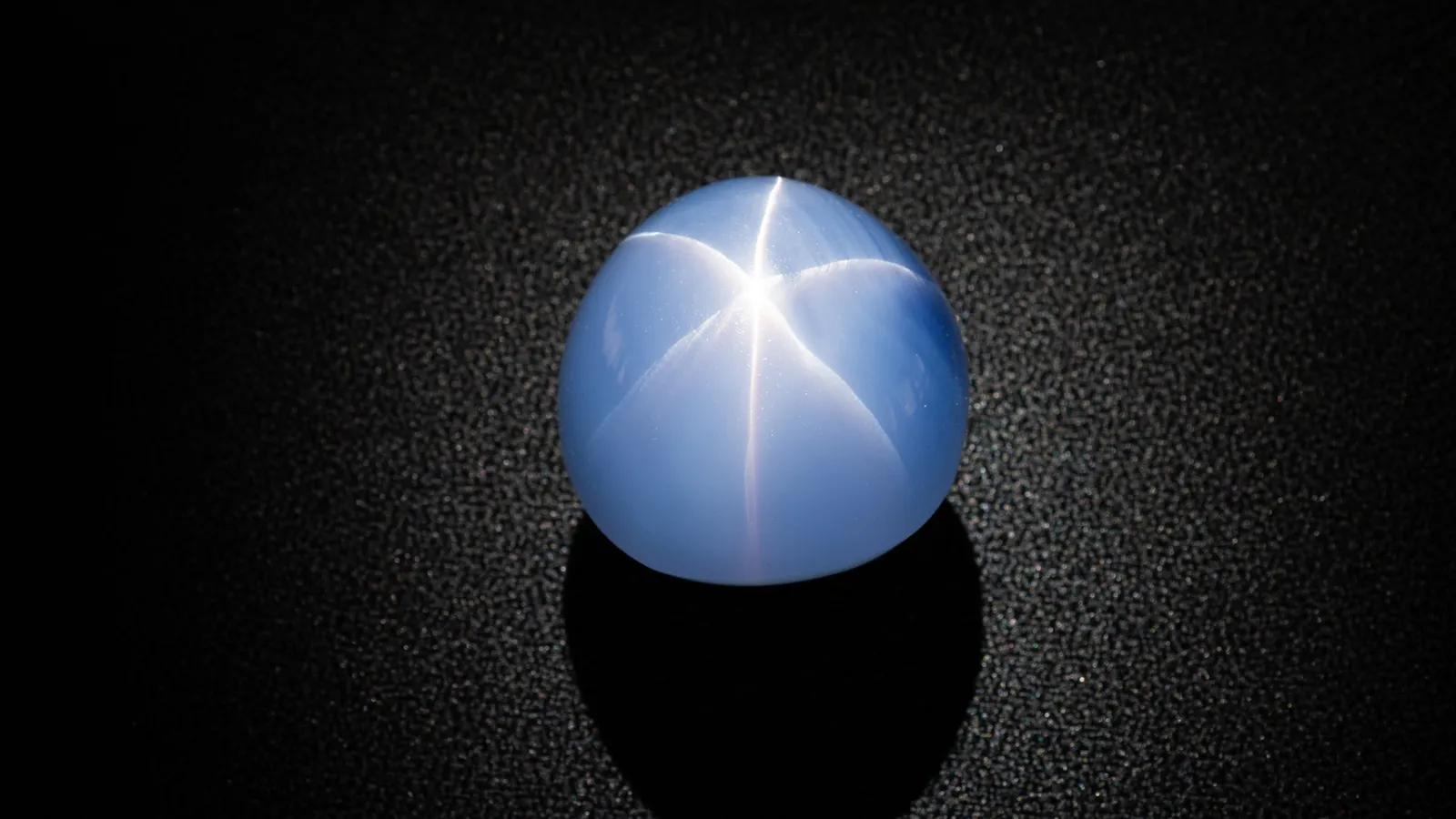
The star itself, the six-rayed asterism that gives the gem its name, is technically a flaw. It's caused by needle-thin inclusions of rutile aligned inside the crystal, and the Star of India is unusual in having it visible on both sides of the stone.
None of that is why most people have heard of it. On the night of 29 October 1964, three men — Jack Murphy, later nicknamed "Murph the Surf," among them — climbed through an unlocked bathroom window at the museum and stole the Star of India along with twenty-one other gems, including the DeLong Star Ruby. The Star of India was the only stone in the collection with an alarm on its case, and the battery had gone dead. The gems turned up two months later in a locker at a Miami bus station, the sapphire undamaged inside a wet leather bag. It went back on display, where it remains.
The Logan Sapphire: a Christmas gift that outlived a marriage
The Logan Sapphire weighs 423 carats, making it the heaviest mounted gem in the Smithsonian's National Gem Collection, and its story is really a story about second marriages. Before it changed hands within the Guggenheim family, the stone belonged to Sir Ellice Victor Sassoon, third Baronet of Bombay, whose family is said to have acquired it from a maharajah in India. Colonel M. Robert Guggenheim then gave the cushion-cut sapphire, mined in Sri Lanka and set in a brooch with twenty diamonds, to his wife Rebecca Pollard Guggenheim as a Christmas gift in late 1952. The Colonel died in 1959. Rebecca remarried, this time to John A. Logan: it's her second husband's surname, not her first husband's gift, that the sapphire has carried ever since.
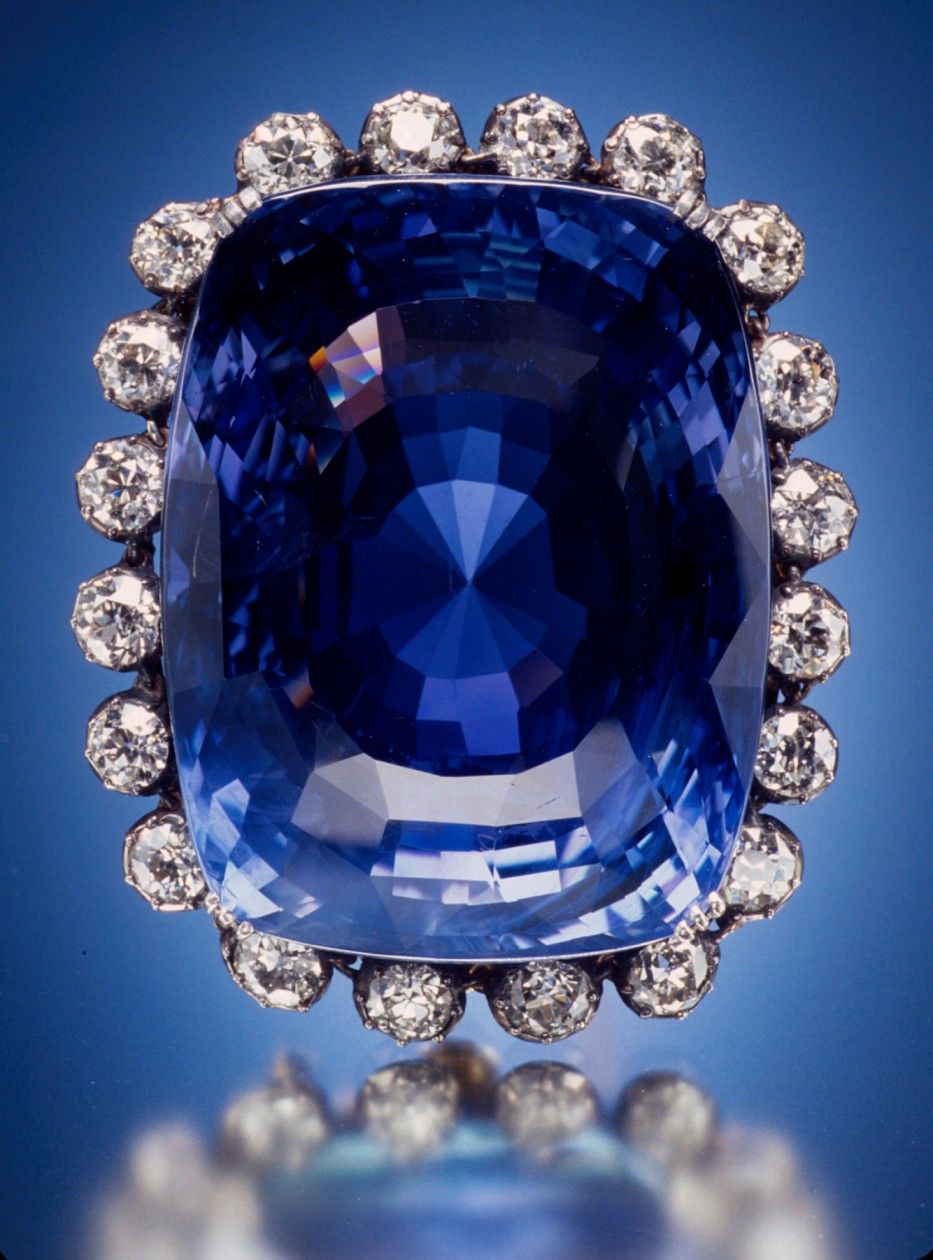
Rebecca donated the stone to the Smithsonian in 1960 but kept it in her own possession for another eleven years before it finally went on public display in 1971. In 1997, the Gemological Institute of America studied the gem and confirmed its violet-tinged medium blue was entirely natural: no heat treatment, nothing enhanced.
Prince Albert's Sapphire Brooch: the gift that became a Crown heirloom
The night before her wedding in February 1840, Queen Victoria received a brooch from Prince Albert: a large oblong sapphire ringed by twelve diamonds, in gold. She recorded it in her diary as "really quite beautiful" and wore it to her wedding the following day.
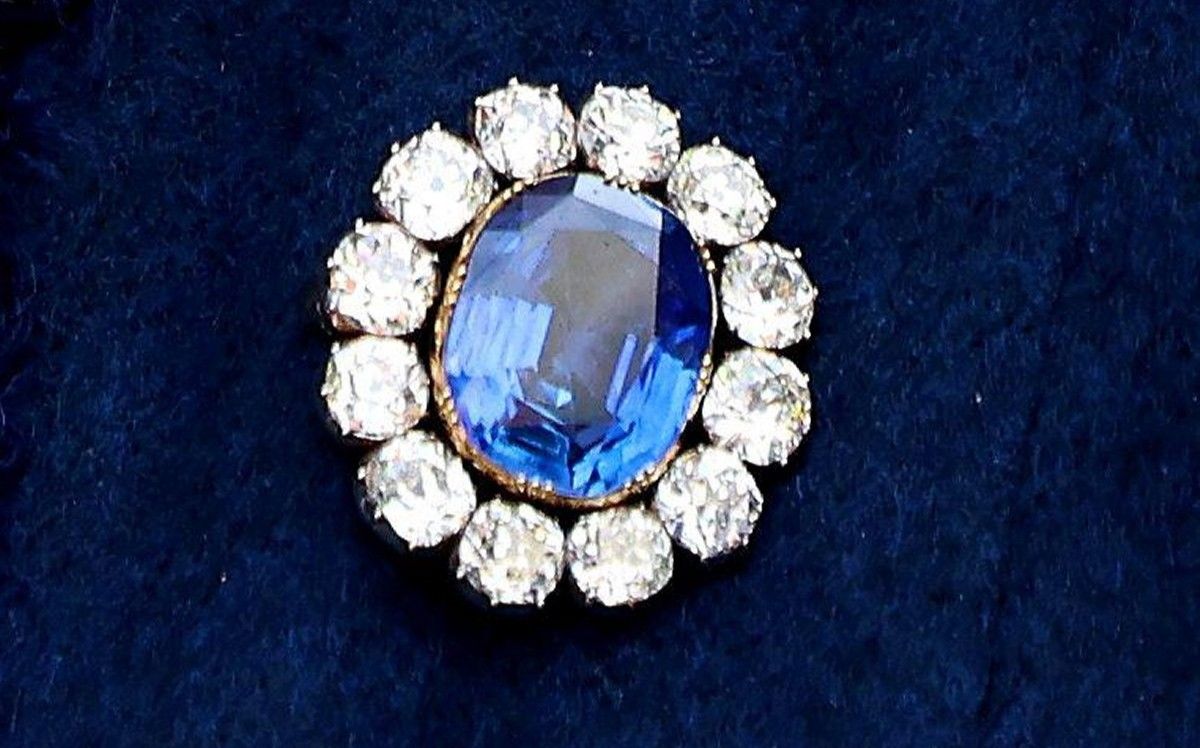
Nobody knows exactly where Albert bought it. The Royal Collection's best guesses are the London jewellers Kitching & Abud or Mortimer & Hunt, though a Dutch or German origin hasn't been ruled out either. What's certain is what Victoria did with it afterwards. She wore it constantly through her marriage, rarely after Albert's death in 1861, and on her own death in 1901 she left instructions that it should never leave the Crown: an heirloom for every reigning queen who followed her.
It has been worn since by Queen Alexandra, Queen Mary, and Queen Elizabeth II, who wore it to Prince William's christening in 1982 among many other occasions, and Queen Camilla now wears it too, usually for higher-profile moments. A brooch bought as a private, sentimental gift between two newlyweds became, by explicit royal instruction, public property in perpetuity, and it is still in active rotation more than 180 years later.
The Blue Belle of Asia: the most expensive sapphire ever sold
Every other stone on this list has spent decades on public display. The Blue Belle of Asia has spent most of its life in the opposite condition: missing.
The 392.52-carat cushion-cut Ceylon sapphire was mined in 1926 and bought by Lord Nuffield, the British car manufacturer behind Morris Motors, who is rumoured to have intended it as a gift for Queen Elizabeth — the future Queen Mother — at the coronation of George VI in 1937. She never took possession of it. The stone then disappeared into private hands for roughly thirty-five years, its whereabouts unknown even to specialists.
It resurfaced at Christie's Geneva in November 2014, where it set a new world record for any sapphire sold at auction: roughly $17.3 million, or about $44,000 per carat, against a pre-sale estimate of under $10 million. It was the first time a coloured gemstone had outsold every diamond lot at a major jewellery auction. The stone returned to Christie's again in 2025 with a more conservative estimate, a reminder that even record-setting provenance doesn't guarantee a record-setting rebid. If a sale like that has ever made you curious about bidding yourself, our guide to buying jewellery at auction is a reasonable place to start.
Princess Diana's engagement ring: the one everybody already knows
Every sapphire on this list until now was chosen, bought, or stolen by someone with money and no audience. Diana's ring is the opposite case: a stone selected in public, by a woman who knew exactly how many people were watching.
In February 1981, Prince Charles proposed with a selection of rings from Garrard's catalogue instead of a single bespoke design, and Diana picked the sapphire herself: a 12-carat oval Ceylon stone surrounded by fourteen diamonds, set in white gold. It wasn't made for royalty. It was a catalogue item, priced at roughly £47,000, and anyone with the means could have bought the identical ring. That detail scandalised parts of the royal establishment at the time, who were used to bespoke commissions, not off-the-shelf jewellery worn by a future queen consort.
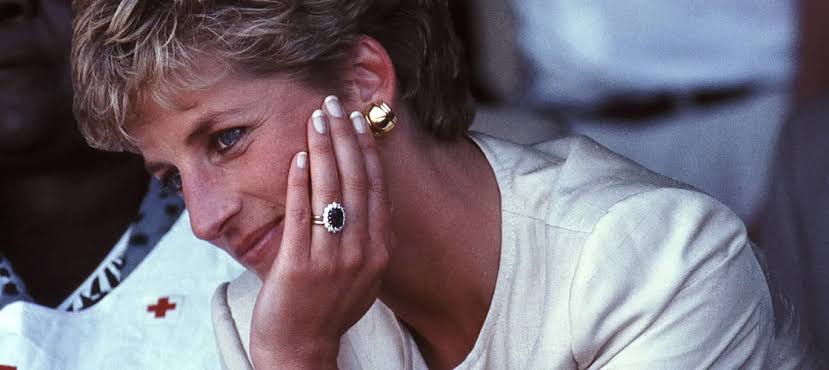
After Diana's death in 1997, the ring passed to Prince William, who gave it to Catherine Middleton when he proposed in 2010. It has now been worn by two generations of the same family through two separate engagements, thirty years apart, which may be the only thing more unusual than choosing it from a catalogue in the first place.
Quick Reference
| Stone | Carats | Current home | Notable fact |
|---|---|---|---|
| Star of India | 563.35 | American Museum of Natural History, New York | Stolen in 1964, recovered in a Miami bus locker |
| Logan Sapphire | 422.99 | Smithsonian National Museum of Natural History | Named for the donor's second husband, not the one who gave it |
| Prince Albert's Sapphire Brooch | Undisclosed | British Crown Jewels (worn, not displayed) | Crown heirloom since 1901; worn by six queens |
| Blue Belle of Asia | 392.52 | Private collection | $17.3 million at auction, the sapphire world record |
| Princess Diana's/Kate's ring | 12 | Worn by the Princess of Wales | Chosen from a catalogue, not commissioned |
Interested in buying a sapphire of your own? Our Sapphire Buying Guide covers colour, origin, and where to look. For engagement rings specifically, see our guide to the best sapphire engagement rings.
Frequently asked questions
What is the most famous sapphire in the world?
There's no single answer, but the Star of India is probably the best-known by name, thanks partly to its size and partly to the 1964 museum heist. Princess Diana's ring is likely the most recognisable by sight, given how many people have seen it worn.
What is the most expensive sapphire ever sold?
The Blue Belle of Asia, a 392.52-carat Ceylon sapphire, sold for roughly $17.3 million at Christie's Geneva in 2014, the highest price ever recorded for a sapphire at auction.
Why are so many famous sapphires from Sri Lanka?
Sri Lanka, formerly Ceylon, has produced exceptional sapphires for centuries from alluvial deposits around Ratnapura. Four of the five stones in this piece trace back to Sri Lankan mines.
Is Princess Diana's engagement ring a real sapphire?
Yes. It's a 12-carat oval Ceylon sapphire surrounded by fourteen diamonds, originally sold through Garrard's catalogue instead of commissioned as a one-off royal piece.
Sources
- American Museum of Natural History, Star of India exhibit
- Gem-A, "Famous Gemstones: The Star of India Sapphire"
- Smithsonian National Museum of Natural History, Logan Sapphire collection notes
- The Court Jeweller, "Prince Albert's Brooch"
- National Jeweler, "'Blue Belle' rings in record sale for Christie's"
- Garrard, "How Princess Diana's Engagement Ring Inspired the 1735 Collection"


