
On 2 and 3 April 1987, Sotheby's Geneva held two consecutive days of sales dedicated entirely to the jewellery of the Duchess of Windsor. The collection had been assembled across five decades, primarily at Cartier and Van Cleef & Arpels, by a man who had given up the British throne to give it to her. The sale raised £31.4 million (roughly $50 million at the time). At the time, it was the most valuable jewellery auction in history. The buyer of the Cartier flamingo brooch — a piece made in 1940, set with a yellow diamond body, rubies, sapphires, and onyx feet — paid £1.3 million for an object that had cost a fraction of that when Edward gave it to her during their wartime exile.
The numbers were extraordinary. What was more significant, though not immediately apparent, was what the sale revealed to the houses themselves. Cartier and Van Cleef & Arpels both sent representatives to Geneva. What they saw was that their most extraordinary mid-century work — pieces they had made, sold, and not thought about since — had been sitting in a private house in the Bois de Boulogne for forty years, worn by a woman with very specific opinions about jewellery, and had become more important in the interval than anyone had fully understood.
Wallis Simpson did not create that importance by owning the pieces. She created it by wearing them, and by wearing them in a way that made them mean something beyond their constituent parts.
The woman
Bessie Wallis Warfield was born in 1896 in Blue Ridge Summit, Pennsylvania. She married twice before she met Edward: first to a US Navy aviator named Win Spencer, from whom she was divorced; then to an Anglo-American businessman named Ernest Simpson. She was living in London as Ernest Simpson's wife when she was presented to the Prince of Wales at a house party in 1931.
What happened between 1931 and 1936 is the most documented romance in the history of the British monarchy, and there is no useful purpose in recounting it at length here. By December 1936, Edward VIII had abdicated, signed away the throne, and was preparing to leave England to marry the woman the establishment had decided it could not accommodate. He became the Duke of Windsor. She became the Duchess of Windsor, by letters patent that specifically and deliberately denied her the title Her Royal Highness that would have been her right as the wife of a royal duke. She was aware of this distinction, and she held it against the family for the rest of her life. The jewellery, which Edward gave her in quantities that alarmed even the people accustomed to royal generosity, may have been partly compensatory for the status that could not be conferred by other means.
What he gave her
Edward began giving Wallis jewellery before the abdication. Several of the pieces that appeared in the 1987 sale were bought while he was still Prince of Wales — the Cartier Tutti Frutti necklace, for instance, a cascade of carved emeralds, rubies, sapphires, and diamonds in the Indian manner, which he gave her in 1936, was one of the most celebrated Art Deco Cartier pieces ever made.
After the abdication, the gifts accelerated. They lived in a series of rented houses in France and then, eventually, in a Villa in the Bois de Boulogne leased from the City of Paris. Edward had a private income and money from the sale of Sandringham and Balmoral to the Crown; he was not as rich as people assumed, but he was rich enough. The jewellery he gave Wallis was a consistent priority.
The gifts were recorded in Cartier's archives: the Tutti Frutti necklace, a series of panther brooches and clips, a bracelet with cross motifs from their wedding, pieces with the "WE" monogram for Wallis and Edward. Van Cleef & Arpels made her several significant pieces, including a remarkable ruby and diamond necklace. Schlumberger designed for her later. The collection, by the time it went to Sotheby's, ran to several hundred lots.
What gave the collection its particular character was not its scale but its consistency. Wallis wore jewellery with deliberation. She was not beautiful in a conventional sense — she said so herself — and she dressed with severity: dark, plain, fitted. The jewellery was the extravagant element in an otherwise controlled composition. A single extraordinary brooch against a plain dark dress. A single wide bracelet on an otherwise undecorated wrist. The pieces were chosen to be seen, and she wore them in a way that ensured they were.
The panther and Cartier
The panther is now so central to Cartier's visual identity that it is easy to forget the association was made, to a very significant degree, by one woman.
Cartier had produced animal pieces before the Windsors became clients. But the panther, which became the house's defining motif, was consolidated through Wallis's patronage. She wore panther clips at her collar, panther brooches on her jacket, a three-dimensional panther crouched on a large cabochon sapphire that she wore as a bracelet. The pieces were made by Cartier's London and Paris workshops, designed under the direction of Jeanne Toussaint — the designer known within the house as La Panthère, who had been responsible for the panther motif almost since its inception.
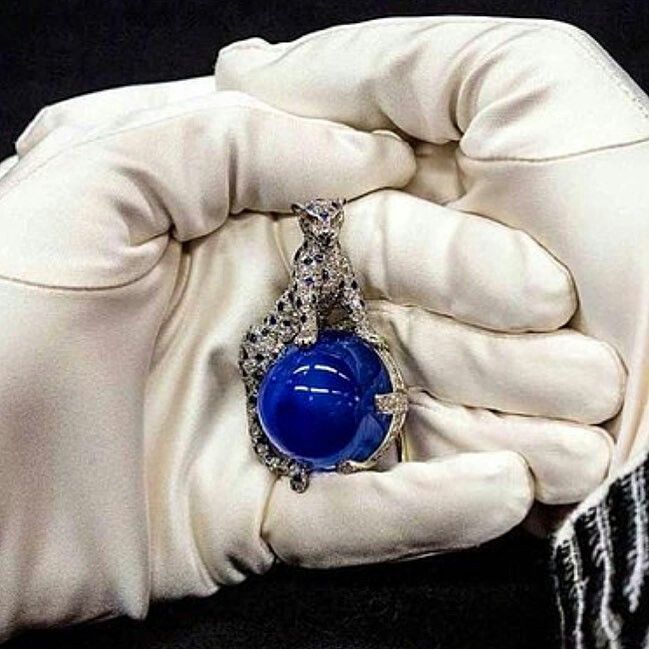
Toussaint and Wallis understood each other in the way that a designer and a client sometimes do: Wallis brought the severity of taste that made the panther's theatricality legible rather than excessive, and Toussaint brought an animal that suited a woman who understood power and its symbols. The panther pieces in the 1987 sale were among the most contested lots. They are now among the most sought-after vintage Cartier pieces in existence.
The flamingo
The flamingo brooch is the piece I keep returning to.
It was made in 1940, during the period when the Windsors were in Nassau — Edward had been appointed Governor of the Bahamas, a posting that was widely understood as a form of exile designed to keep him out of wartime Europe. The flamingo was designed in Paris and delivered to Nassau: a bird mid-stride, with a body of yellow diamonds, sapphire wings tipped in ruby, and feet and beak of black onyx and rubies. It is approximately ten centimetres tall. It is, by any measure, an extraordinary object.
What makes it interesting beyond its technical brilliance is what it says about its moment. 1940 is not, on the face of it, a year in which anyone should have been commissioning flamingo brooches in yellow diamond. Europe was at war. The couple's situation was complicated at best. And yet the flamingo exists, made in the best materials by the best workshop in Europe, because Edward wanted to give Wallis something that expressed, in the language both of them spoke, the life they had chosen over the alternatives.
It sold in 1987 for £1.3 million. It has changed hands since. It appears in Cartier retrospectives as one of the most significant pieces the house has ever made. The flamingo appears in the Bahamas on no coat of arms, royal or otherwise.
The 1987 sale and its aftermath
The Duchess of Windsor died on 24 April 1986. She had been ill for several years, increasingly incapacitated, and the last period of her life was not comfortable. She left the collection to the Institut Pasteur in Paris, the research institute, with instructions that it be sold. Mohamed Al-Fayed, who had bought the lease on the Windsor house from the City of Paris, organised the sale with Sotheby's.
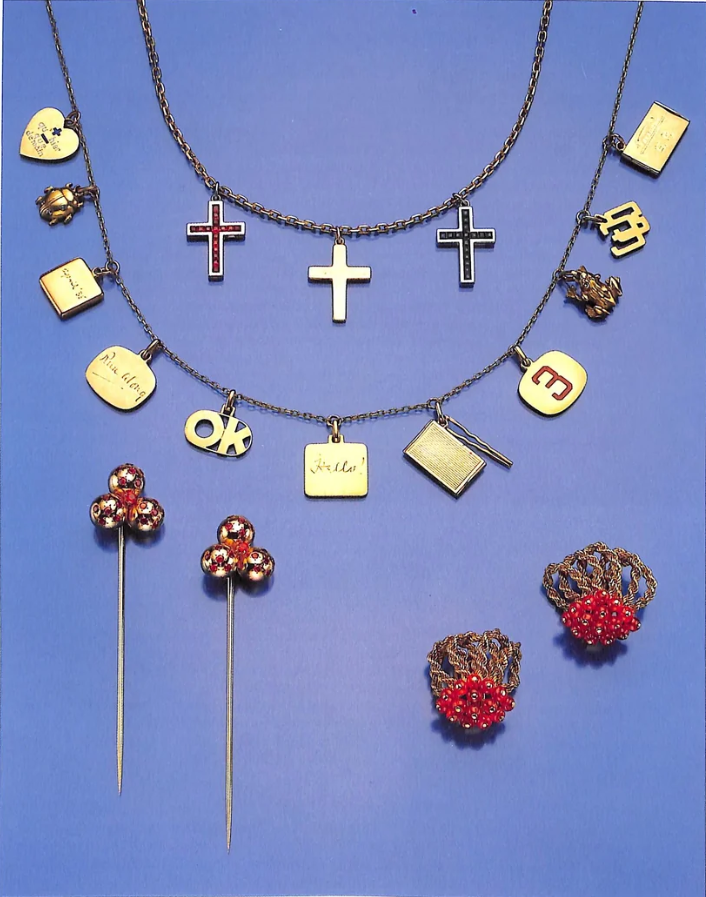
The auction took place over two days in Geneva. The rooms were full of dealers, collectors, and press. The Cartier representatives attended and outbid several parties on a number of lots. Van Cleef & Arpels bought pieces back from their own archive. Private collectors from across the world — particularly from Japan, which was then at the height of its luxury buying period — drove prices to levels that had not been anticipated.
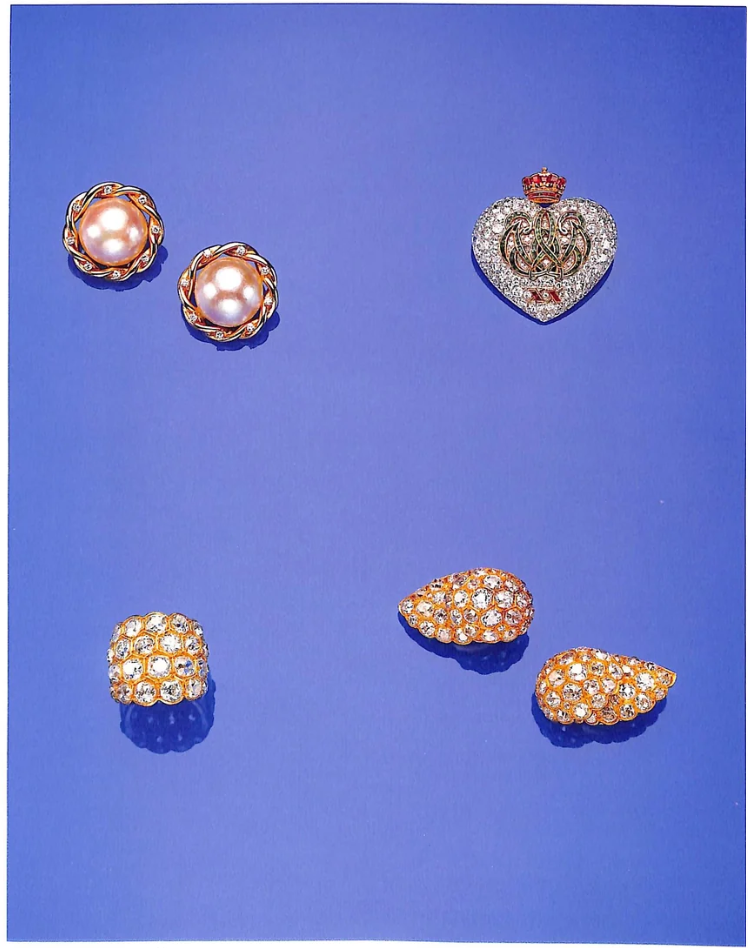
The total of £31.4 million was approximately three times the pre-sale estimate. The Institut Pasteur received the proceeds and the collection dispersed. Some pieces went into private collections and have not been seen since. Some have appeared at subsequent auctions: the flamingo brooch has traded several times. Some are in the Cartier archive, bought back by the house and not for resale.
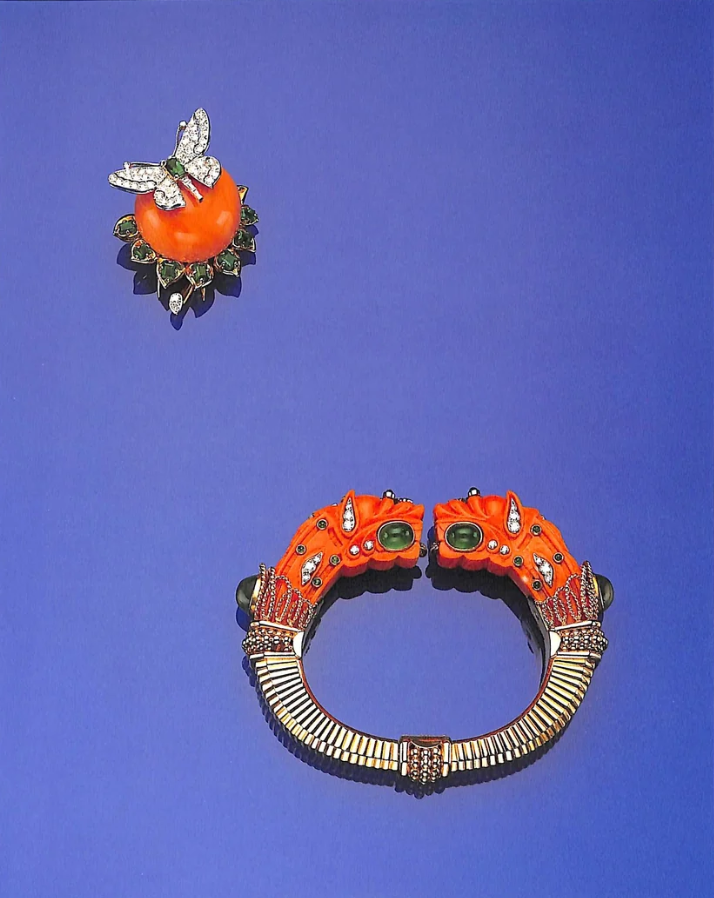
What the sale did, beyond the immediate result, was establish Wallis's jewellery as a category of its own: historically significant, aesthetically coherent, the product of a specific taste applied consistently over five decades. The houses understood, from 1987 onwards, that their mid-century work had produced pieces of a different order of importance than their contemporary output had suggested at the time. The closest comparison since has been Elizabeth Taylor's collection at Christie's New York in 2011, which raised over $137 million and confirmed the pattern Wallis had set: a single woman, a coherent taste, the right houses, the right four decades.
What she understood
Wallis Simpson understood jewellery the way very few people do: as a language with grammar and vocabulary, in which each choice means something specific in relation to the other choices being made simultaneously. The severity of the dress was not a background for the jewellery; it was a decision that gave the jewellery permission to speak. The single flamingo on the plain dark jacket did not shout. It said something precise, to someone who knew how to listen.
She was not sentimental about the pieces. When they needed to be reset or altered, she altered them. When something stopped working in a composition, she stopped wearing it. The collection, for all its grandeur, was a working wardrobe rather than a museum. That is probably why it remained coherent across five decades: she was wearing it rather than preserving it.
The HRH that was never conferred. The children she did not have. The country she could not return to. The pieces are what remain, scattered now across private collections and auction catalogues, most of them unaware of each other's existence. They were more coherent when she wore them.
Frequently asked questions
What happened to Wallis Simpson's jewellery?
After the Duchess of Windsor's death in April 1986, her jewellery collection was sold at Sotheby's Geneva over two days on 2 and 3 April 1987. The sale raised £31.4 million (roughly $50 million at the time), at the time the most valuable jewellery auction in history. The proceeds went to the Institut Pasteur in Paris, as specified in the Duchess's wishes. The collection dispersed to private collectors worldwide, with several pieces later reappearing at subsequent auctions and others not seen publicly since.
What was the most expensive piece in the Wallis Simpson jewellery sale?
The 1987 Sotheby's sale included the Cartier Tutti Frutti necklace and numerous panther pieces, but the piece that has attracted the most sustained attention is the Cartier flamingo brooch, made in 1940 during the Windsors' time in Nassau. Set with yellow diamonds, sapphires, rubies, and onyx, it sold for £1.3 million in 1987. It has since changed hands several times and appears regularly in major Cartier retrospectives.
What was Wallis Simpson's connection to Cartier?
The Duchess of Windsor was one of Cartier's most significant clients of the mid-twentieth century. Edward gave her a series of major Cartier commissions, including the Tutti Frutti necklace, multiple panther pieces designed in collaboration with Cartier's Jeanne Toussaint, and the flamingo brooch. Her consistent patronage of the panther motif helped establish it as a defining Cartier signature. Cartier representatives attended the 1987 sale and reacquired several pieces for the house archive.
Why was Wallis Simpson denied the HRH title?
When Edward VIII abdicated in December 1936 and became Duke of Windsor, letters patent were issued that specifically excluded the Duchess of Windsor from holding the title Her Royal Highness, which would normally accompany the wife of a royal duke. The exclusion was a deliberate decision by the Palace and the government and was not reversed during the Duchess's lifetime. She was aware of the distinction and resented it deeply.
Where can I see Wallis Simpson's jewellery today?
Most of the collection is in private hands and not publicly accessible. Cartier has reacquired several pieces and includes them in periodic retrospective exhibitions. The flamingo brooch and several other significant pieces have appeared at subsequent auctions. The Cartier archive in Paris holds documentation of all the pieces the house made for the Duchess, which has been the basis of several scholarly publications on mid-century jewellery design.
Related reading
- Cartier: A Family History — the house Wallis's patronage helped define
- Elizabeth Taylor's Jewellery — the parallel celebrity collection sold at major auction, with significant overlap in Cartier provenance
- Chopard at Cannes — another study in how a specific patronage relationship shapes a house's identity
- Jewellery That Holds Its Value — the secondary-market case for signed pieces with documented provenance
- Tiffany & Co: A History — the New York house Schlumberger designed for after Wallis's main commissioning years
Sources: Sotheby's Geneva sale catalogue, The Jewels of the Duchess of Windsor, April 1987; Vivienne Becker, Cartier (Thames & Hudson, 2015); Hugo Vickers, The Duchess of Windsor (Weidenfeld & Nicolson, 1988); Penny Proddow and Marion Fasel, Hollywood Jewels (Abrams, 1992); Royal Collection Trust documentation on the abdication and subsequent letters patent.


