
There is a particular kind of shop that Venice specialises in: the sort you could walk past forty times and never quite register, tucked a few doors from somewhere far louder, giving away nothing through the glass. Casa Codognato, on Calle Vallaresso, a stone's throw from Harry's Bar, is exactly that shop. It has occupied more or less the same corner of the city since 1866, and for most of the last century it belonged, in every sense that mattered, to one man who seemed entirely uninterested in being found.
Attilio Codognato died in 2023, at eighty-six, having run the family business since 1958. I find him a difficult figure to write about cleanly, because the facts of his career keep wanting to arrange themselves into a fairy tale, and I am suspicious of fairy tales. And yet here they are anyway. A hairdresser to Richard Burton and Elizabeth Taylor ringing ahead one morning in 1973 because the couple wanted to see a gold snake bracelet immediately, and would he mind coming to the hotel. Coco Chanel finding one of her signature jade-toned pearl strands on his shelves. Maria Callas, Jacqueline Kennedy, the Duke and Duchess of Windsor, all passing through a shop most of Venice's day-trippers never noticed existed. Luchino Visconti, filming Death in Venice nearby, apparently turned up every day for weeks, buying one small piece at a time, never once asking the price.
None of this was engineered. That is, I think, the part worth sitting with.
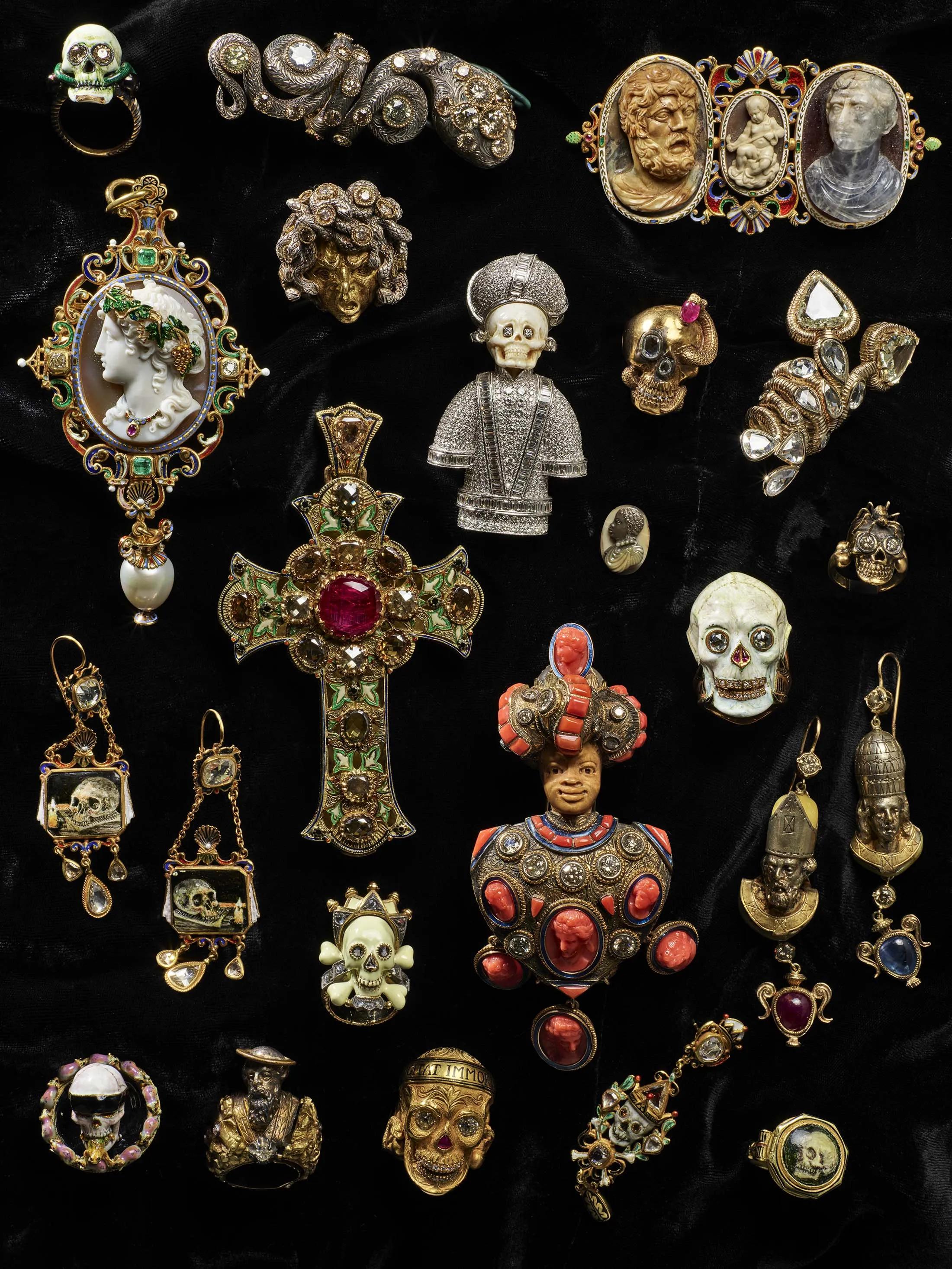
A house built on the wrong kind of jewellery
Codognato's signature was death, more or less literally. Skulls carved from mammoth ivory with diamond eyes. Snakes coiled into bracelets and rings. Poison rings with hinged compartments. Cameos and intaglios pulled from Etruscan and Roman iconography, reset into something baroque and slightly threatening. This is, by any sensible commercial logic, a difficult sell. Memento mori jewellery does not flatter in the way a solitaire flatters. It does not say I am loved so much as I am, for now, alive, which is a stranger and less marketable sentiment, and one I happen to find far more honest.
He inherited the taste for it rather than invented it. The house was founded by his great-grandfather Simeone in 1866; the skull-and-serpent house style was already established by the time Attilio arrived. He took over the business at twenty, having lost his own father at eleven and learned the trade largely on the job, apprenticed for a period in Hatton Garden before returning to Venice. What he inherited, alongside the motifs, was something harder to pass down: a genuine indifference to scale. Casa Codognato has operated from a single point of sale for over a century and a half. There has never been a second boutique, a diffusion line, a wholesale arrangement. Pieces are still made in small numbers by a tight circle of Venetian and Italian artisans, and Codognato bought back older pieces at estate sales when he found them, partly, one suspects, so he could keep deciding who got to own them.
I do not think this counts as a strategy in the way we currently use that word. It reads more like a man who simply never developed the appetite for more, and built a business that reflected that, decade after decade, without apparently noticing it had become one of the most quietly coveted names in jewellery.
The art collector who happened to sell jewellery
The other detail I keep returning to is that Codognato was, by most accounts, at least as consumed by contemporary art as by his own trade. His personal collection ran to Warhol, Duchamp, Cy Twombly, Robert Rauschenberg, Bruce Nauman. He founded a gallery, the Galleria del Leone, in 1962. His children have said, since his death, that he was not a conventional father: he never took them to a football match, didn't reliably know which school they attended, but filled their childhoods with visits to artists' studios instead. It is not a portrait of a man optimising for anything except his own fascinations, jewellery included.
That, I think, is why the client list reads the way it does. It was never a celebrity strategy. Nicole Kidman, A$AP Rocky, Rihanna, Nicolas Cage, Damien Hirst, Miuccia Prada, Alessandro Michele, Maria Grazia Chiuri — the roll call spans six decades and about as many industries, and the common thread isn't a publicist's placement, it's that the work was strange and specific enough to keep finding people who wanted exactly that.
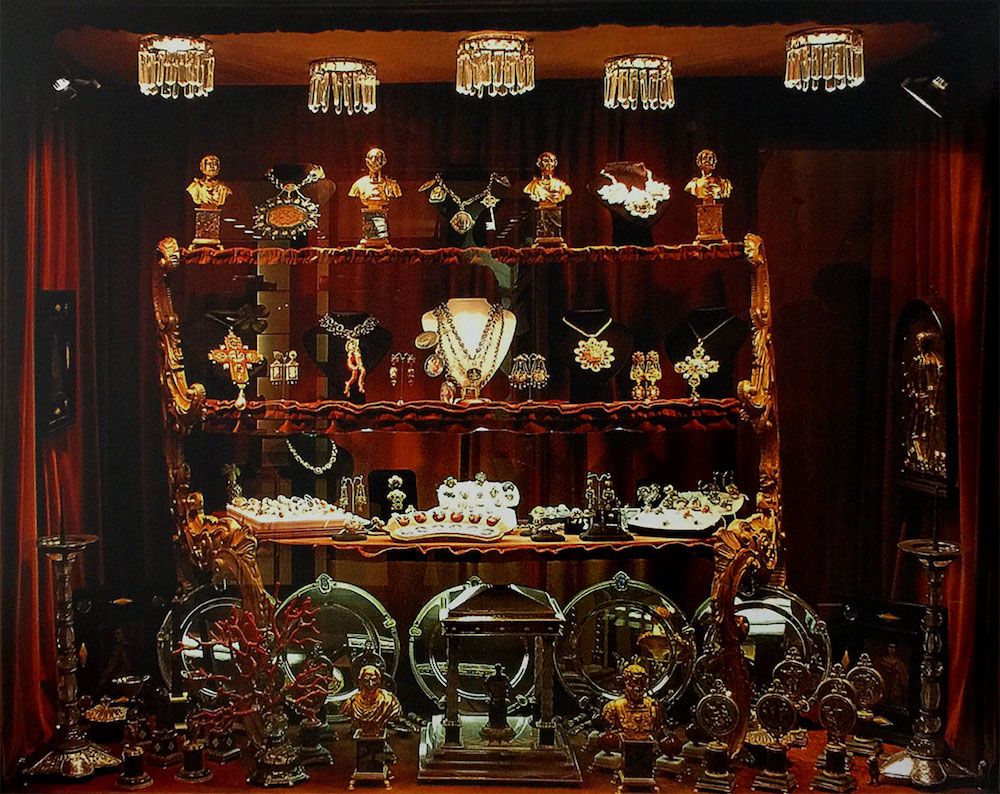
What happens after
The house now belongs to his children, Mario and Cristina Codognato, with Mario's wife Henrietta Labouchere also involved in running it. This is, in family businesses built entirely around one person's eye, always the harder chapter than the founding one. Attilio Codognato had reportedly begun discussing the future of the house's creative direction before his health declined; what's actually happened since is that his son and daughter have simply continued running it themselves, sourcing the stones and antique cameos, maintaining the relationships with the same small circle of artisans he relied on. Whether a sensibility this particular can survive its originator by two more generations is not a question I can answer from London. But the shop is still there, still by appointment, still on Calle Vallaresso, which is more than most century-and-a-half-old jewellery houses manage to say.
For anyone who wants the fuller picture without booking a flight to Venice, Assouline released Codognato: Masterpiece the same year Attilio died — three hundred pages of the house's baroque jewels set against the city that made them, co-written by William Middleton and Laurence Benaïm. It is, inevitably, a coffee-table object rather than a substitute for the shop itself, but it is the closest most of us will get to the cabinets on Calle Vallaresso.
In Brief: Attilio Codognato ran Venice's Casa Codognato, a single-boutique jewellery house founded in 1866 and known for macabre, memento-mori pieces — skulls, snakes, poison rings — that drew clients from Elizabeth Taylor to Rihanna without ever expanding beyond one shop, one appointment book, or one very specific idea of what jewellery should say.
I am not, as a rule, sentimental about "old world" anything; the phrase is usually doing marketing work in disguise. But there is something quietly instructive in a business that got more exclusive not by manufacturing scarcity, but by simply never wanting to be anything other than itself. It is rarer than it sounds. I suspect it is rarer now than it has ever been.


